
 EN
EN
 AR
AR
 BG
BG
 CS
CS
 FR
FR
 DE
DE
 EL
EL
 IT
IT
 JA
JA
 KO
KO
 NO
NO
 PL
PL
 PT
PT
 RU
RU
 ES
ES
 TL
TL
 ID
ID
 SR
SR
 SK
SK
 TH
TH
 TR
TR
 MS
MS
 KA
KA
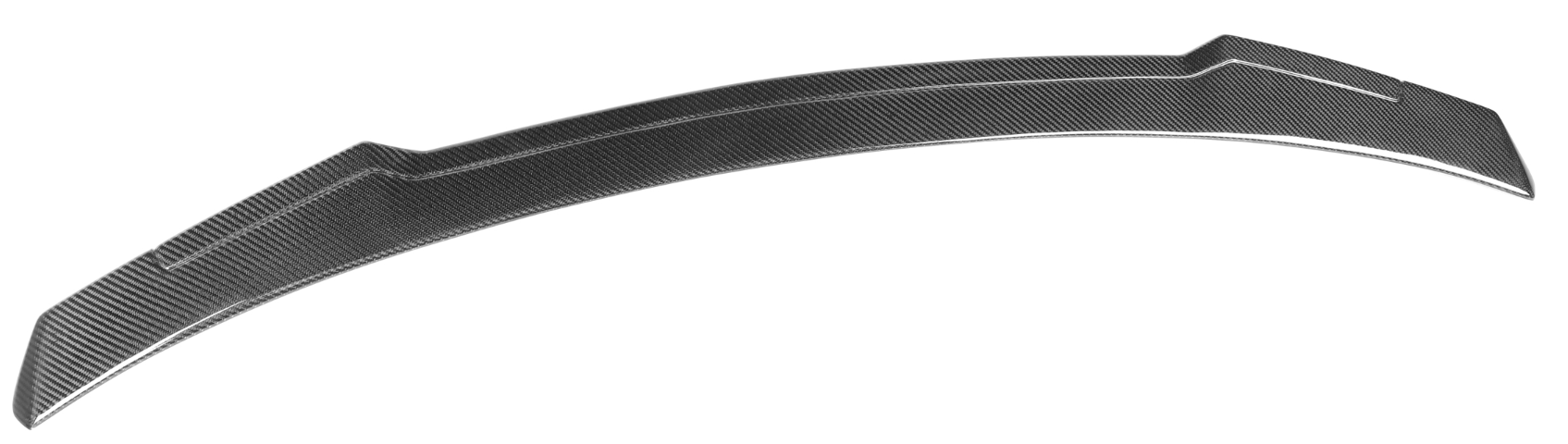
The Science Behind Car Rear Spoilers and Driving Stability
How car rear spoilers reduce lift and improve high-speed stability
Car rear spoilers work by changing how air moves around vehicles, which helps fight against the lifting force that happens when cars go fast. When speed goes past about 50 miles per hour, the air flowing over the back of the car creates these areas of low pressure on top of the trunk area. Wind tunnel tests have shown this can actually reduce the amount of tire contact with the road surface by as much as 28%. That's where spoilers come into play they basically push some of that air upwards instead, helping balance out the pressure distribution across the rear wheels so the tires stay better connected to the pavement for more stable handling at high speeds.
Aerodynamics 101: Managing airflow to enhance vehicle control
Good spoiler design isn't really about creating maximum downforce, it's more about controlling how air flows smoothly over the car. Most engineers set their spoilers at angles somewhere between 15 to maybe 25 degrees. That helps redirect air properly so the car stays stable on the road while not adding too much resistance. When cars hit around 40 miles per hour or faster, this better airflow management actually makes them less affected by side winds. Tests show something like a 30-odd percent improvement in handling during these situations. Drivers tend to feel more secure behind the wheel when unexpected gusts come along, which matters quite a bit during bad weather driving conditions.
Downforce and its role in increasing tire grip and cornering precision
Rear spoilers generate measurable downforce, boosting tire contact pressure by 18–22% during cornering above 60 mph (Automotive Aerodynamics Study). This added grip raises the threshold for loss of control by 17%, particularly during emergency maneuvers or on wet surfaces, allowing drivers to maintain stability under dynamic driving conditions.
Lightweight Materials Revolutionizing Rear Spoiler Performance
Why Carbon Fiber Is the Top Choice for High-Performance Car Rear Spoilers
High performance applications often rely on carbon fiber because of how strong it is relative to its weight. We're talking about something that weighs around 70 percent less than steel and about 40 percent less than aluminum. This significant reduction in weight helps cut down on air resistance without compromising the structure when subjected to intense forces. What really stands out though is how well carbon fiber holds up over time against wear and tear. That's why we see so much of it in racing contexts where speed matters most. Some research indicates that using carbon fiber spoilers can boost side-to-side stability by nearly 20% compared to regular materials, though actual results might vary depending on specific conditions and design factors.
Comparing Aluminum, Plastic, and Carbon Fiber: Weight, Cost, and Efficiency
| Material | Weight (kg/m²) | Cost Relative to Steel | Drag Reduction Efficiency |
|---|---|---|---|
| Aluminum | 4.2 | 2.1x | 22% |
| ABS Plastic | 3.1 | 1.3x | 15% |
| Carbon Fiber | 1.8 | 6.7x | 31% |
Aluminum offers a practical balance of cost and performance, while injection-molded plastics suit budget models but degrade under sustained loads above 120 mph. Carbon fiber, despite its higher cost, delivers superior efficiency and durability, making it the preferred choice for performance-oriented designs.
How Weight Reduction Improves Suspension Response and Overall Handling
Lighter spoilers make for better suspension response. Saving around 500 grams cuts down stress on shocks by roughly 9 percent, which means the car reacts about 0.03 seconds quicker when hitting bumps or rough patches. Drivers notice this as improved cornering and grip when pushing through twisty roads. What's more, cutting weight lowers what engineers call the polar moment of inertia. This makes cars turn more nimbly, especially important for quick lane changes or avoiding obstacles suddenly.
From Design to Road: Engineering Aerodynamically Efficient Rear Spoilers
Balancing Downforce and Drag in Modern Spoiler Design
Spoilers today aren't just about looking cool on cars; they're actually designed to strike a balance between creating downforce and managing drag. When set up properly, these modern spoilers can boost downforce anywhere from 15 to 30 percent compared to standard versions, all while keeping drag increases under 8%. According to research published in Nature last year, the sweet spot for maximum efficiency tends to be around 12 to 14 degrees angle of attack, since that's when the air flows smoothly over the surface without separating. Some newer asymmetric designs, such as the S1223 profile, have proven superior to those old NACA shapes we used to see everywhere. These new profiles manage to create almost 20% better performance in terms of how much downforce they produce relative to drag, making them a real game changer in aerodynamics.
| Design Factor | Impact on Downforce | Impact on Drag |
|---|---|---|
| 8° Attack Angle | +12% | +5% |
| 14° Attack Angle | +28% | +11% |
| S1223 Airfoil | +22% | +7% |
Wind Tunnel Testing and CFD Simulations in Car Rear Spoiler Development
The combination of computational fluid dynamics (CFD) and traditional wind tunnel testing has completely changed how spoilers are developed these days. Companies report saving around 40% on prototype expenses while getting products to market much faster than before. Recent research from last year showed that CFD simulations actually match what happens in real life pretty closely most of the time, usually within just 2.3% difference compared to actual test results. Most car makers today use advanced SST k-omega turbulence models alongside smaller scale wind tunnels at about one fifth full size to check how their designs hold up when faced with serious crosswinds, sometimes as strong as 65 miles per hour blowing sideways across the vehicle.
Real-World Application: OEM Integration of Lightweight Rear Spoilers for Stability
Car manufacturers are putting more active spoilers into vehicles these days. These spoilers can change angles from around 5 to almost 18 degrees depending on how fast the car is going and what direction it's turning. The main point is they help keep the car stable while still being good for gas mileage. Tests actually found that cars with these systems had better control at high speeds, improving performance by about 31 percent according to some studies. When tested in real conditions, mid sized family cars with these adjustable spoilers stopped much quicker too. During sudden lane changes at highway speeds of 70 miles per hour, drivers saw stopping distances reduced by roughly 16%. That kind of improvement makes a real difference in accident situations.
FAQ Section
What is the primary function of a car rear spoiler?
A car rear spoiler primarily functions to improve vehicle stability by reducing lift and maintaining better tire contact with the road surface at high speeds.
Why is carbon fiber used in high-performance car rear spoilers?
Carbon fiber is used for its strength-to-weight ratio, significantly reducing weight while maintaining structural integrity, which enhances performance by reducing air resistance.
How do active rear spoilers work?
Active rear spoilers adjust angles based on speed and direction to maintain stability and improve fuel efficiency, helping reduce stopping distances during sudden maneuvers.
How do spoilers impact car handling during side winds?
Spoilers improve car handling by managing airflow, which reduces the effects of side winds, making the vehicle more stable, particularly at speeds over 40 mph.