
 EN
EN
 AR
AR
 BG
BG
 CS
CS
 FR
FR
 DE
DE
 EL
EL
 IT
IT
 JA
JA
 KO
KO
 NO
NO
 PL
PL
 PT
PT
 RU
RU
 ES
ES
 TL
TL
 ID
ID
 SR
SR
 SK
SK
 TH
TH
 TR
TR
 MS
MS
 KA
KA
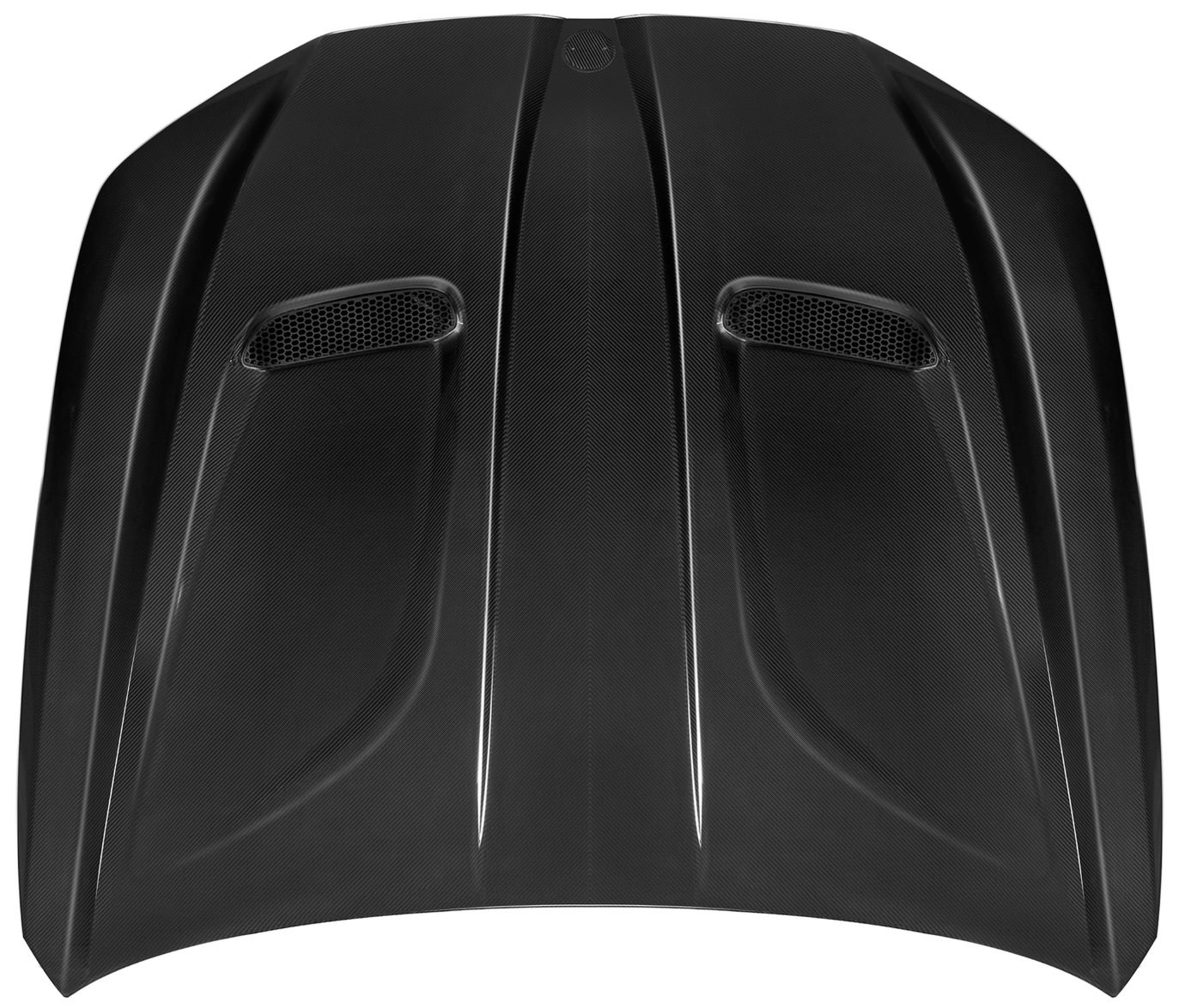
How Carbon Fiber Hoods Handle Heat: Material Science and Thermal Properties
Thermal performance in modern automotive design: The role of the car hood bonnet
For high performance cars, the hood or bonnet isn't just there for looks either. It actually plays a big role in keeping the engine compartment at optimal temperatures. Car manufacturers these days are really focused on finding materials that weigh less but still handle heat well. We've seen research showing that if engines get too hot, their efficiency drops around 7 percent give or take. That makes sense when thinking about how important temperature control is for maintaining power output and fuel economy in sports cars and racing machines.
Material properties of carbon fiber related to heat transfer
The way carbon fiber handles heat comes down to how it's built - basically carbon strands woven together inside an epoxy resin base. The carbon parts actually move heat along certain directions, somewhere between 10 to 50 W/mK depending on how they're aligned. Meanwhile, the resin part stays stable even when temperatures hit around 350 degrees Fahrenheit or 177 Celsius before breaking down, which makes it act like insulation. Because of this combination, the whole material conducts heat at about 1 to 5 W/mK, much less than aluminum's impressive 237 W/mK figure. Still, carbon fiber stands out because it can handle more heat than fiberglass without melting, plus it weighs far less than most metal alternatives.
Anisotropic conductivity: Why carbon fiber's directional structure affects heat flow
Because of its anisotropic properties, heat tends to move much easier along the length of the fibers compared to across them. Longitudinal conductivity is actually around ten times higher than what we see in the transverse direction. Engineers take advantage of this by positioning the fibers in specific ways so they can direct heat away from parts that might get damaged by excessive temperatures. Looking at recent research on thermal conductivity reveals some interesting things about how companies adjust fiber placement inside automotive hoods for example. They create areas where heat either stays put for insulation purposes or gets directed outwards when they need better dissipation characteristics.
Comparative thermal conductivity: Carbon fiber vs. steel and aluminum hoods
| Material | Thermal Conductivity (W/mK) | Heat Resistance Limit (°F) | Weight Savings vs Steel |
|---|---|---|---|
| Carbon Fiber | 1-5 (direction-dependent) | 400 | 50-70% |
| Aluminum | 237 | 400 | 40-50% |
| Steel | 50 | 600+ | Baseline |
Data from thermal performance comparisons shows carbon fiber hoods offer an optimal balance for modern engines operating below 400°F. While steel withstands higher temperatures, its high thermal conductivity creates concentrated hot zones—particularly problematic in forced induction setups.
Carbon Fiber vs. Traditional Metal Hoods: A Real-World Thermal Comparison
Heat resistance of common hood materials: Steel, aluminum, and carbon fiber
Steel hoods don't conduct heat very well at all, with thermal conductivity around 16.2 W/mK. That means engines stay hotter for longer periods after shutdown. Aluminum is much better at moving heat away from hot spots, clocking in at about 205 W/mK, though it does weigh quite a bit more than alternatives like carbon fiber. Carbon fiber materials work differently because of their layered construction. According to recent research from 2023 on composite materials, these fibers spread heat sideways about 40 percent quicker than traditional metals can manage. The downside? They aren't so great when it comes to conducting heat straight through vertically, sitting somewhere between 5 and 7 W/mK for that direction.
Performance under high temperatures: When lightweight meets thermal load
Carbon fiber hoods are about 65 percent lighter than their steel counterparts which means they don't retain heat as much and cool down faster after brief drives. This makes them particularly useful for city driving where cars constantly start and stop. But there's a catch. If these hoods stay exposed to temperatures over 300 degrees Fahrenheit (around 149 Celsius) for too long, the resin in the material starts to break down. That's why race teams often use special heat resistant resins when building components for track days. These modified materials can handle up to around 450 degrees F (about 232 C) according to what we've seen in actual racing conditions on circuits worldwide.
Real-world temperature testing: Carbon fiber car hood bonnet versus OEM metal hoods
In controlled 30 minute dyno tests conducted when temps hit around 95 degrees Fahrenheit or 35 Celsius, carbon fiber hoods ran about 15 percent cooler on average compared to their aluminum versions. Recent thermal imaging research from 2024 indicates that properly ventilated carbon fiber models cut down under hood heat buildup by roughly 22 percent while driving at highway speeds. Steel hoods made by original equipment manufacturers do hold their own though, staying temperature stable for longer periods when vehicles sit idle because of their greater thermal mass. This creates something of a dilemma for engineers trying to balance maximum cooling efficiency against consistent heat control over time.
Functional Vents and Active Cooling: Do They Improve Heat Dissipation?
Carbon fiber car hood bonnets face a critical engineering challenge: balancing lightweight construction with effective heat dissipation. While the material’s anisotropic conductivity provides inherent advantages, modern performance vehicles often require additional cooling strategies to manage engine bay temperatures exceeding 150°C in turbocharged applications.
Role of functional vents in enhancing thermal performance of carbon fiber hoods
Adding functional vents turns those boring flat panels into something that actually manages heat instead of just sitting there. Solid hoods tend to trap all that hot air radiating from the engine bay, but when we put vents in the right spots, they start working with the wind rather than against it. The airflow gets a boost because of how these vents are shaped and placed. Some recent research on this forced convection stuff shows pretty impressive results too. When vents are correctly positioned, they can really crank up the airflow underneath the hood by around 180 to 220 cubic feet per minute. That means cars stay cooler for longer periods after shutting off the engine, cutting down heat soak time by roughly 40 to 50 percent compared to those old style carbon fiber hoods without any ventilation at all.
Design integration: How vented hoods improve airflow and reduce engine bay heat
Effective vent implementation requires precise alignment with vehicle-specific airflow patterns:
| Design Factor | Non-Vented Hood | Vented Hood |
|---|---|---|
| Peak Surface Temp | 142°C | 117°C |
| Air Velocity Increase | Baseline | 2.8x |
| Coolant Temp Stability | ±8°C | ±3°C |
NACA duct-inspired vent shapes create controlled low-pressure zones that pull heat away from critical components without compromising structural integrity. Computational fluid dynamics (CFD) analyses confirm optimized vents reduce turbulent airflow by 62% compared to simple cutouts.
Case study: Performance gains from vented carbon fiber hoods in track-driven vehicles
A 12-month evaluation of modified sports cars revealed:
- 22-second lap time improvement (per 5-mile circuit) due to consistent intake air temperatures
- 38% reduction in brake fluid vaporization incidents
- 15% lower average turbocharger housing temperatures (93°C vs 109°C)
Track telemetry shows vented hoods maintain engine bay temperatures 18–23°C below OEM aluminum hoods during aggressive driving. Thermal imaging further validates that heat dissipation follows engineered fiber orientations, confirming the advantage of directional conductivity when combined with smart design.
Limitations and Trade-offs: Thermal Resistance vs. Lightweight Design
Resin Matrix Vulnerabilities: The Weak Link in Carbon Fiber’s Heat Resistance
Carbon fiber definitely stands out when it comes to strength without adding much weight, but there's one big problem with how it handles heat. The plastic stuff that holds everything together in these materials starts to get all gooey around 150 to 200 degrees Celsius according to some recent industry reports from last year. That's way lower than what happens to metals like steel which melts somewhere between 1370 and 1510 degrees, or even aluminum at just 660 degrees. When things get really hot for extended periods, the carbon fibers themselves might stay okay, but the whole structure falls apart because the binding material breaks down first.
Extreme Conditions: Pushing the Limits of Carbon Fiber Car Hood Bonnet Performance
When it comes to carbon fiber reinforced polymer (CFRP) hoods, they just don't perform as well when exposed to those intense heat situations we see in turbocharged engines or electric vehicles. According to some recent tests from the 2024 Material Performance Review, these CFRP hoods actually retain heat about 23% faster compared to traditional aluminum ones during those frequent stops and starts typical of city driving. And there's another issue too: because of how CFRP conducts heat unevenly, certain areas near exhaust manifolds or turbochargers tend to get really hot. This creates problems for the resin components over time, causing them to break down much sooner than expected in real world applications.
| Property | Carbon Fiber Hood | Aluminum Hood |
|---|---|---|
| Heat Deflection Temp | 180°C | 250°C |
| Thermal Conductivity | 5–7 W/mK | 235 W/mK |
| Structural Integrity | Degrades at 200°C | Maintains up to 400°C |
Designers must balance these limitations against the 60% weight reduction versus steel hoods, as noted in lightweight manufacturing research. Optimal performance increasingly relies on hybrid solutions such as ceramic-infused resins or integrated active cooling systems.
Are Carbon Fiber Hoods Overrated for Thermal Performance?
Balancing Aesthetics, Weight Savings, and Actual Heat Dissipation Benefits
Switching to carbon fiber hoods cuts down on weight by about half when compared to traditional steel models, all while keeping things sturdy even when temps hit around 400 degrees Fahrenheit according to some recent thermal tests from 2024. Sure, steel can handle much hotter situations (like over 600 degrees F), but what makes carbon fiber really stand out these days is how manufacturers have started adding those clever vent designs. These vents actually drop the temperature inside the engine compartment by roughly 18 to maybe 22 degrees Fahrenheit during normal driving conditions. What matters most isn't just the lightweight aspect or heat tolerance alone, but how well these materials work together with smart airflow engineering to keep engines running cooler and more efficiently overall.
| Material | Max Temp (°F) | Thermal Conductivity (W/mK) | Weight (lbs) |
|---|---|---|---|
| Carbon Fiber | 400 | 5–10 (directional) | 8–12 |
| Steel | 600+ | 45–80 | 30–45 |
| Aluminum | 400 | 120–240 | 15–25 |
This hybrid approach—leveraging directional conductivity and active ventilation—delivers practical thermal improvements beyond what raw conductivity metrics suggest.
Industry Debate: Is the Focus on Carbon Fiber Diverting Attention From Better Cooling Solutions?
Some folks in the industry think all this hype around carbon fiber is getting in the way of real progress on thermal management. According to research from SAE International back in 2023, those fancy liquid cooling setups actually knock out about three times more heat per pound compared to regular old passive materials on car hoods. Sure, those carbon fiber hoods with vents can drop temperatures under the hood somewhere between 12 and 18 degrees Fahrenheit. But look at phase-change coatings instead, and they're pushing past 30 degree drops when things get really hot out there. So here's something worth thinking about: are we focusing too much on making cars lighter and sexier at the expense of bigger innovations like adjustable vents or proper heat exchangers for engines? From what we've seen so far, just improving materials isn't going to beat out completely rethinking how we handle heat in vehicles if we want maximum thermal performance.
Frequently Asked Questions
What are the benefits of using carbon fiber hoods?
Carbon fiber hoods offer significant weight savings compared to steel or aluminum, improving fuel economy and performance. They also provide directional heat conductivity, allowing for efficient heat management when designed with smart airflows like vents.
How does carbon fiber compare to aluminum in terms of heat management?
Carbon fiber has lower thermal conductivity than aluminum, but it can handle high temperatures well without melting. By integrating vents, carbon fiber hoods can manage heat dissipation effectively, outperforming traditional metal designs in certain scenarios.
Are carbon fiber hoods suitable for all types of vehicles?
Carbon fiber hoods are particularly beneficial for performance vehicles due to their lightweight nature and heat management capabilities. However, they may not be ideal for vehicles consistently operating under extreme temperatures without specialized resins.
Table of Contents
-
How Carbon Fiber Hoods Handle Heat: Material Science and Thermal Properties
- Thermal performance in modern automotive design: The role of the car hood bonnet
- Material properties of carbon fiber related to heat transfer
- Anisotropic conductivity: Why carbon fiber's directional structure affects heat flow
- Comparative thermal conductivity: Carbon fiber vs. steel and aluminum hoods
- Carbon Fiber vs. Traditional Metal Hoods: A Real-World Thermal Comparison
- Functional Vents and Active Cooling: Do They Improve Heat Dissipation?
- Limitations and Trade-offs: Thermal Resistance vs. Lightweight Design
- Are Carbon Fiber Hoods Overrated for Thermal Performance?
- Frequently Asked Questions