
 EN
EN
 AR
AR
 BG
BG
 CS
CS
 FR
FR
 DE
DE
 EL
EL
 IT
IT
 JA
JA
 KO
KO
 NO
NO
 PL
PL
 PT
PT
 RU
RU
 ES
ES
 TL
TL
 ID
ID
 SR
SR
 SK
SK
 TH
TH
 TR
TR
 MS
MS
 KA
KA
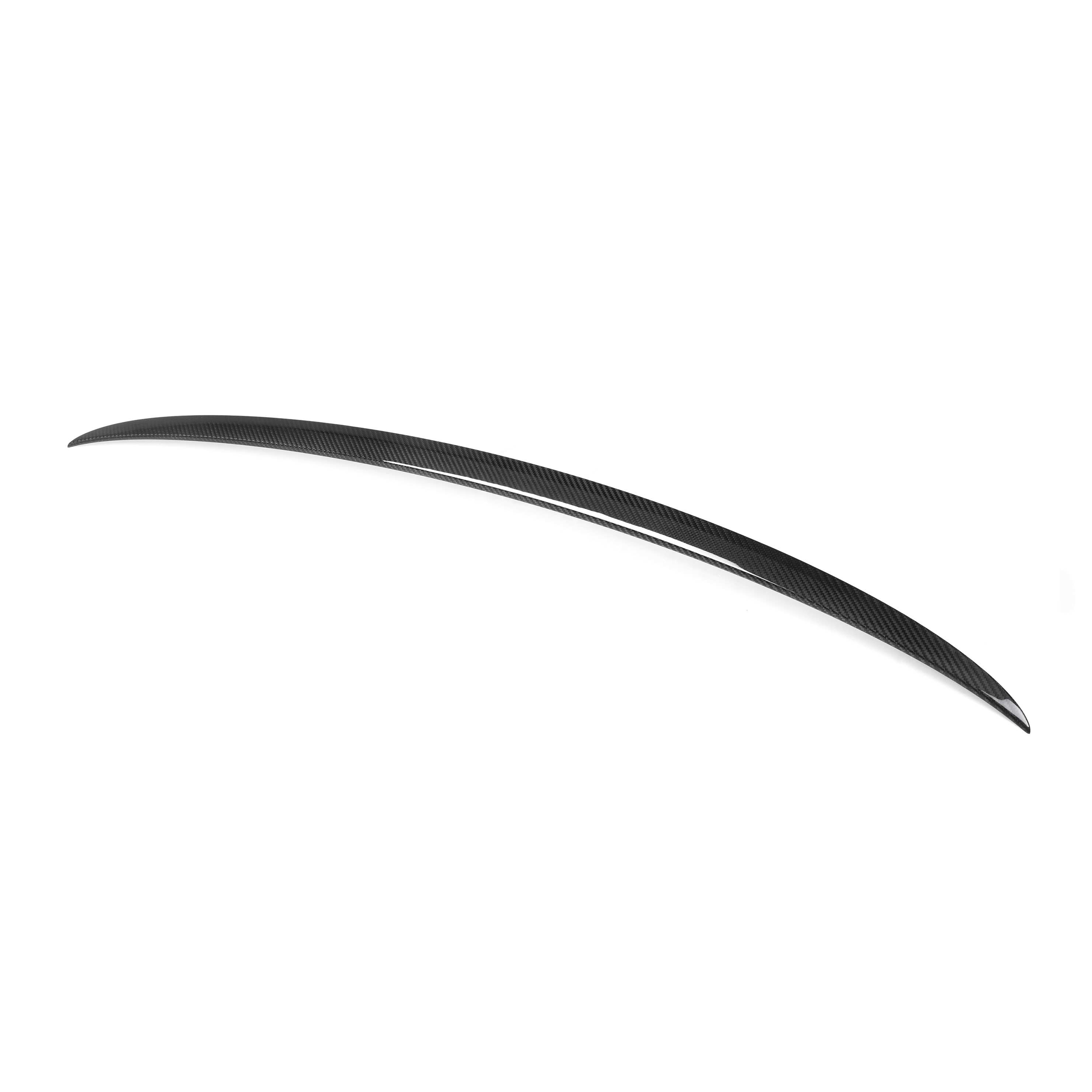
The Aerodynamic Function of Rear Spoilers in Performance Vehicles
Understanding the Purpose of a Rear Spoiler in Enhancing Vehicle Performance
Putting rear spoilers on cars helps keep them stable when going fast because they cut down on how much air lifts the car off the road. According to computer models used in wind tunnel testing, good quality spoilers can actually bring lift down around 30 percent. This makes tires stick better to pavement surfaces and improves how well a car handles corners. Research published in Nature last year looked into different spoiler heights and discovered something interesting: when spoilers are about 10 centimeters tall, they work best for creating downward force without adding too much resistance against forward motion. So performance oriented vehicles stay planted on the ground whether speeding up or slowing down, but still manage to maintain decent fuel economy overall.
How Spoilers Influence Aerodynamic Drag and Downforce Effects
When spoilers create turbulence at the back of a car, they mess with those low pressure areas that normally help create lift. The result? More downforce which means better grip when going fast around corners. Some studies show that changing spoiler angles to somewhere between 45 and 60 degrees while slowing down can actually increase downforce by about 18 percent, making brakes work better too maybe around 12% improvement there. But watch out if we go too far with these angles because it might add as much as 15% extra drag on the car. That's why finding the right balance matters so much for everyday driving situations where performance needs meet practical considerations.
Aerodynamic Performance of Fastback Vehicles with Integrated Rear Spoilers
The fastback shape tends to create problems with airflow at the back of the car, leading to those messy wake patterns we all know and hate, plus extra drag. That's where those integrated rear spoilers come into play they basically extend the angle of the roof so air stays attached longer instead of breaking away too soon. According to wind tunnel tests, cars with this design actually cut down on drag by around 22% when compared to models with plain flat backs. And what does that mean for drivers? Well, aside from looking cooler, these streamlined shapes let cars hit higher speeds while saving gas too. Most estimates put fuel savings somewhere between 8 and 10% during regular highway driving, which adds up over time especially for folks who spend a lot of miles on the road.
Computational Fluid Dynamics (CFD) Simulations for Vehicle Aerodynamics
Computational fluid dynamics (CFD) tools give engineers the ability to simulate complicated air flow patterns and pressure distribution across surfaces with remarkable accuracy. This lets them tweak spoiler designs on screen long before building any actual prototypes. Take for instance recent studies showing that setting spoilers at around 12 degrees helps reduce lift significantly while maintaining drag coefficients under 0.3 Cd, which is pretty much standard for serious performance vehicles these days. The time saved through such simulations speeds up product development considerably. Plus, manufacturers can fine tune their aerodynamics specifically for how each car looks and performs on the road.
Downforce, Traction, and High-Speed Stability
Rear Spoiler Impact on Downforce and Drag: A Physics-Based Analysis
When air gets pushed upwards by those rear spoilers on cars, it actually creates something called downforce which makes tires grip the road better. Studies show this can boost tire pressure against the pavement by around 30% when cruising at normal highway speeds. What does this mean for drivers? Well, it fights against that annoying lift effect that starts happening once vehicles hit about 70 miles per hour and beyond, where steering becomes less responsive. Now here's an interesting twist: traditional fixed angle spoilers do come with a tradeoff though. They tend to add roughly between 12 to 18 percent more resistance while moving forward. But newer models with adjustable spoiler tech have solved this problem pretty well. These smart systems only create about 5 to 8 percent extra drag instead, because they automatically change shape depending on what the car is doing at any given moment.
Downforce and Its Impact on Traction and Grip During High-Speed Cornering
At speeds exceeding 100 mph, effective spoilers improve lateral grip by 22% in standardized track tests, allowing performance vehicles to sustain up to 1.3G of lateral acceleration—19% more than non-spoiler-equipped counterparts. This enhanced grip keeps all four tires firmly planted, minimizing slip angles and improving handling predictability during aggressive cornering.
Balancing Downforce and Aerodynamic Drag for Optimal Performance
To maximize performance, engineers target a 2.5:1 downforce-to-drag ratio. At this balance, vehicles achieve high-speed stability without excessive energy loss. Simulations demonstrate that a 15° spoiler angle improves lap times by 1.8 seconds on circuits with long straights compared to steeper fixed designs, illustrating how subtle optimizations significantly impact real-world performance.
Controversy Analysis: When Too Much Downforce Compromises Efficiency
Street legal cars with fixed rear spoilers tend to burn about 9% more fuel at around 75 mph because they create constant drag. Car makers have noticed this problem and started incorporating active aerodynamics into their designs. About three quarters of new performance cars now come with these systems. The technology works by tucking away the spoiler when the car is moving steadily down the highway to save gas, then popping it out again whenever extra stability or better handling is required during cornering or high speed driving situations.
Rear Spoilers in Motorsports and Real-World Performance Applications
Use of rear spoilers in motor sports and performance driving
Rear spoilers play a big role in keeping tires stuck to the road when cars push their limits on race tracks. These wings create downward force that basically pushes the car harder onto the pavement, which helps with faster acceleration out of corners and better handling through turns. According to some wind tunnel testing from last year, these spoilers cut down on rear wheel lift by about 18 percent once speeds hit 150 miles per hour or more. That makes a real difference in stability when drivers need to pass other cars or navigate those tricky high speed changes between straights and curves.
Case Study: GT race cars utilizing adjustable rear spoilers for track optimization
Many top GT3 racing teams now rely on electronically adjustable rear spoilers to get their cars balanced just right for different parts of the track. At last year's Spa-Francorchamps 24 hour endurance race, there was actually a team that managed to gain around 2.3 seconds per lap simply by adjusting their rear wing angles according to how high or low they were going over those famous Eau Rouge and Raidillon corners. They tested this approach extensively on actual tracks before implementing it, which allowed them to maintain great speed when going straight while still keeping control during tight turns where stability matters most.
Trend: Increasing adoption of active aerodynamics in supercars
The latest hypercars from brands like Koenigsegg with their Jesko model and McLaren's Speedtail come equipped with smart rear spoilers that change position on their own based on GPS information, how much weight is on the suspension, and current speed. When drivers hit the brakes hard, these systems pop out to help slow down faster. But when accelerating again, they tuck back in to cut through air resistance better. Tests show this kind of active system gives about 7 to maybe even 12 percent better performance overall compared to regular fixed spoilers on race tracks and normal roads alike. Car manufacturers see this as a big deal for both track days and everyday driving conditions.
Adjustable and Active Rear Spoiler Technology for Dynamic Conditions
Adjustable Spoiler Angle and Height Optimization for Dynamic Conditions
Adjustable spoilers let drivers fine tune how their car handles different road conditions. According to computational fluid dynamics research, changing both the height and angle of these spoilers can cut wind resistance by around 12 percent and boost downforce as well. Most manufacturers find that setting the spoiler about 10 centimeters high works best for everyday driving, cutting lift by roughly 22% when traveling on highways. When set flat at 0 degrees, this height creates minimal drag for normal cruising. But when angled between 45 to 60 degrees, the same position dramatically improves stopping power because it pushes the car down harder onto the road surface. This makes all the difference in real world situations where sudden stops are needed.
| Spoiler Height (cm) | Angle Range (°) | Primary Effect | Tradeoff |
|---|---|---|---|
| 5–8 | 0–30 | Drag reduction | Limited downforce generation |
| 10–12 | 0–45 | Balanced drag/downforce | Moderate weight penalty |
| 13–15 | 30–60 | Maximum downforce | 18% drag increase at high speeds |
Strategy: Adaptive Rear Spoilers Responding to Speed, Braking, and Steering Inputs
Modern cars equipped with AI adaptive systems keep track of speed, steering angles, and brake pressure so they can tweak the spoiler's position on the fly. When taking tight corners at high speeds, the system actually tilts the rear wing to fight off those sideways forces, which helps boost tire grip somewhere around 9 to 14 percent. Once speeds hit over 150 kilometers per hour, the car automatically lowers the spoiler to cut down on air resistance while still keeping things efficient. This kind of tech is becoming really important for electric sports cars since manufacturers need to balance two competing priorities: maximizing battery range while ensuring the vehicle stays stable at highway speeds.
Comparative Benefits and Design Types of Rear Spoilers Across Performance Vehicles
Benefits of Spoilers Across Different Vehicle Types, Especially Performance Cars
The benefits of spoilers really depend on what kind of car we're talking about. For performance vehicles, these additions can cut down aerodynamic lift by around 25% when driving at typical highway speeds, which makes the car much more stable and easier to handle. Sports cars often go for those big wing style spoilers because they want maximum grip during corners. Luxury sedans take a different approach though, opting for small lip designs that don't stick out too much but still manage to lower drag and boost gas mileage somewhere around 3.8%. Even SUV owners aren't left out of the equation. Modest spoilers work wonders for these taller vehicles, helping control air flow better and cutting down on turbulence when going fast. The best part is how these practical improvements actually look good too, making them a win-win situation for drivers who care about both performance and appearance.
Types of Car Spoilers, Especially Rear Spoilers: From Lip to Wing Designs
Rear spoiler designs are selected based on performance goals:
- Lip spoilers (0.5–2 inches tall) integrate smoothly with trunk lines, offering moderate downforce with minimal drag—ideal for street-driven sports cars
- Pedestal wings (4–12 inches tall) deliver maximum downforce via adjustable airfoil profiles, making them essential for track-focused vehicles
- Active spoilers automatically deploy above 50 mph, optimizing the balance between daily drivability and high-speed grip
Modern computational modeling ensures each spoiler design aligns precisely with a vehicle’s aerodynamic signature and intended use case, maximizing effectiveness across diverse driving environments.
FAQs about Rear Spoilers in Performance Vehicles
Q: How do rear spoilers help in vehicle performance?
A: Rear spoilers reduce aerodynamic lift, enhance downforce, and improve tire grip, helping in better stability and cornering at high speeds.
Q: What is the ideal height and angle for a rear spoiler?
A: Ideally, a spoiler height of about 10 centimeters and angles between 45 to 60 degrees optimize downforce while minimizing drag.
Q: How do active spoilers differ from traditional ones?
A: Active spoilers adjust automatically based on speed, steering, and braking conditions, improving efficiency and performance compared to fixed-angle traditional spoilers.
Table of Contents
- The Aerodynamic Function of Rear Spoilers in Performance Vehicles
- Downforce, Traction, and High-Speed Stability
- Rear Spoilers in Motorsports and Real-World Performance Applications
- Adjustable and Active Rear Spoiler Technology for Dynamic Conditions
- Comparative Benefits and Design Types of Rear Spoilers Across Performance Vehicles