
 EN
EN
 AR
AR
 BG
BG
 CS
CS
 FR
FR
 DE
DE
 EL
EL
 IT
IT
 JA
JA
 KO
KO
 NO
NO
 PL
PL
 PT
PT
 RU
RU
 ES
ES
 TL
TL
 ID
ID
 SR
SR
 SK
SK
 TH
TH
 TR
TR
 MS
MS
 KA
KA
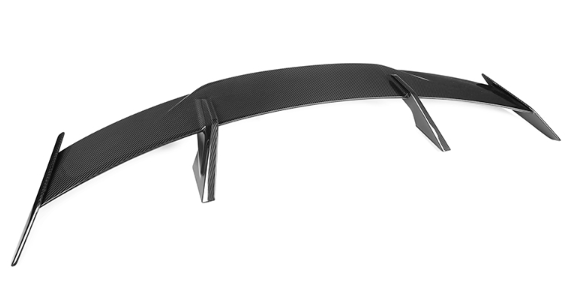
Aerodynamic Fundamentals: How a Car Rear Spoiler Generates Downforce
Lift vs. Downforce: Why Uncontrolled Airflow Reduces Tire Contact and Stability
When cars reach higher speeds, the air flowing over them starts to detach from the back surface, forming areas of low pressure that actually create lift. This can reduce how much pressure the tires have against the road by around 35%, according to research from Valpo University using computational fluid dynamics. The lifting effect makes the car less stable when speeding up or taking corners. That's where rear spoilers come in handy. They work by pushing air upwards, creating a spot of higher pressure right above the trunk area which then presses the vehicle down onto the road. This added downward force puts more weight on those rear wheels, giving better traction and stopping that annoying instability caused by too much lift. It really matters once we get past about 80 kilometers per hour, because even small improvements in this downward force make a noticeable difference in how well the tires stick to the pavement.
Pressure Differential and Boundary Layer Control Behind the Rear Axle
Spoilers enhance downforce through three interrelated aerodynamic mechanisms:
- Pressure equalization: Disrupting laminar flow to suppress low-pressure turbulence behind the rear deck
- Boundary layer redirection: Accelerating air over the spoiler’s upper surface to generate downward momentum via Newton’s third law
- Wake minimization: Shortening the turbulent wake zone behind the rear axle, reducing drag-inducing separation
Strategically mounted at the trunk edge, the spoiler establishes a controlled pressure differential typically 50–100 pascals at highway speeds that forces the rear suspension downward. This increases tire deformation and contact patch area, directly enhancing grip. Computational models confirm optimized spoilers can boost rear downforce by 15–25% without disproportionate drag penalties.
From Downforce to Stability: Real-World Handling Benefits of a Car Rear Spoiler
High-Speed Straight-Line Stability and Reduced Rear Lift at 100+ km/h
When vehicles exceed around 100 km/h, something interesting happens with the rear axle - it starts lifting up, which affects how stable the car feels going straight. That's where rear spoilers come into play. When set up correctly, these spoilers create downward pressure that keeps those back tires planted on the pavement. According to computational fluid dynamics research, good spoilers can cut down on rear lift by roughly 30-35% when driving on highways. This makes a real difference because it reduces that annoying weight shifting effect when speeding up or dealing with sudden side winds. Drivers no longer experience that floating feeling which makes them question if they're actually in control of their lane position.
Enhanced Cornering Grip and Predictable Rear-Axle Response Under Load
When a car takes a corner, weight transfers sideways and reduces what's left of the rear tires' grip on the road. The downforce created by spoilers actually makes those tires work better too, probably around 15 or so percent more contact area depending on conditions. This extra grip helps keep the back end planted when going through turns, whether it's just regular cornering or something more aggressive. Drivers notice this because their cars don't start sliding out as easily, the steering feels more consistent, and everything behaves in a way that makes sense rather than surprising them. Especially important when braking while entering corners, since that's when most drivers struggle to maintain control of the rear wheels.
Car Rear Spoiler Design Variants and Their Stability Impact
Stock Lip Spoilers vs. Adjustable Wing Units: Trade-offs in Downforce, Drag, and Daily Usability
Drivers choosing a rear spoiler must weigh performance against practicality. Factory-integrated lip spoilers generate moderate downforce (reducing rear lift by 15–25% at highway speeds) with minimal drag penalty—making them ideal for daily use. They preserve fuel efficiency, rear visibility, and parking clearance while delivering meaningful straight-line stability.
Adjustable wings, those fancy things with their airfoil shapes and angle adjustments, generate around 40% extra downforce compared to regular lip spoilers according to wind tunnel tests. This makes cars handle better through corners on race tracks. But there are downsides too. These wings create more drag somewhere between 3 to 5 percent, which isn't great for city driving at lower speeds. Drivers also lose visibility behind the car, and the thing hangs so low it can scrape over speed bumps and curbs in town. For everyday drivers who don't need all that racing stuff, simple lip spoilers work just fine most of the time. Wings still have their place though, mainly on track days when having complete control over the back end is worth putting up with all those little annoyances.
Practical Considerations: When a Car Rear Spoiler Delivers Meaningful Stability Gains
Rear spoilers actually make a real difference when driving above 100 km/h or taking corners hard - these are situations where air flowing over the car really starts to affect how it handles. Good quality spoilers can boost rear tire grip by around 15 percent, which helps fight against lift forces and gives better traction when accelerating after turns, making sudden lane changes, or going through high g-force maneuvers. How well they work depends a lot on matching them to the car's weight balance and overall shape. For regular street cars looking for everyday improvements, simple lip spoilers tend to work best. Track focused vehicles benefit from adjustable wings that create maximum downforce, though this comes at the cost of increased drag and makes them less practical for normal driving conditions. The biggest gains happen with rear wheel drive cars and performance models specifically because their back ends tend to be lighter, so the downward force from spoilers has a stronger stabilizing effect, particularly noticeable on bumpy roads or when changing direction quickly.
FAQ Section
What is the primary purpose of a car rear spoiler?
The primary purpose of a car rear spoiler is to reduce lift by generating downforce, improving stability, traction, and control especially at high speeds and during cornering.
How does a rear spoiler affect a car's performance on regular streets?
On regular streets, a rear spoiler can enhance straight-line stability and provide better traction during lane changes and acceleration, though the most significant effects are observed at higher speeds and on performance cars.
What are the differences between lip spoilers and adjustable wing units?
Lip spoilers offer moderate downforce with minimal drag impact, making them suitable for everyday use, while adjustable wing units provide higher downforce for improved handling on race tracks but come with increased drag and reduced usability for daily driving.
At what speed do spoilers make the most noticeable difference?
Spoilers become noticeably beneficial at speeds above 80 km/h, where their ability to reduce lift and improve stability comes into play.
Table of Contents
- Aerodynamic Fundamentals: How a Car Rear Spoiler Generates Downforce
- From Downforce to Stability: Real-World Handling Benefits of a Car Rear Spoiler
- Car Rear Spoiler Design Variants and Their Stability Impact
- Practical Considerations: When a Car Rear Spoiler Delivers Meaningful Stability Gains
- FAQ Section